Ground improvement in Gisborne represents a critical branch of geotechnical engineering focused on enhancing the mechanical and hydraulic properties of soils to support safe, durable construction. This category encompasses a range of techniques designed to increase bearing capacity, reduce settlement, mitigate liquefaction potential, and accelerate consolidation in weak or problematic ground. For a coastal city like Gisborne, where soft alluvial and marine sediments dominate the landscape, the ability to transform marginal land into buildable sites is not just a technical exercise—it is a foundational necessity for urban expansion, infrastructure resilience, and economic development. From residential subdivisions on the Poverty Bay flats to large-scale commercial projects near the Taruheru River, ground improvement underpins the viability of almost every major development in the region.
The local geology of Gisborne is shaped by its position on the East Coast of the North Island, a tectonically active margin characterized by soft sedimentary rocks, alluvial deposits, and significant thicknesses of unconsolidated sands and silts. Much of the urban area sits on the Poverty Bay coastal plain, where Holocene-age sediments—including loose sands, estuarine silts, and peat layers—extend to considerable depth. These soils are prone to settlement under load, have low shear strength, and in some areas exhibit high liquefaction susceptibility during seismic events. The Gisborne District sits within one of New Zealand’s most seismically active zones, near the Hikurangi subduction margin, making earthquake-induced soil failure a genuine concern. Groundwater tables are often high, further complicating foundation design. These conditions demand robust improvement strategies tailored to the specific stratigraphy and performance requirements of each site.
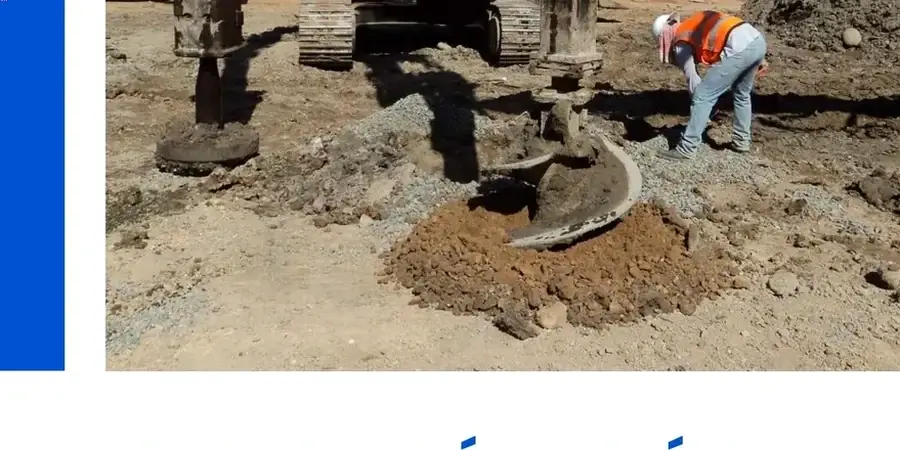
All ground improvement works in New Zealand must comply with the Building Act 2004 and the New Zealand Building Code, which reference a suite of standards including NZS 4404:2010 for land development and subdivision engineering, and the joint Australian/New Zealand standard AS/NZS 1170 series for structural design actions. Specifically, geotechnical investigations and design are guided by NZGS guidelines and the Earthquake Geotechnical Engineering Practice series, which align with Module 2 (Geotechnical Engineering) of the Building Code. In Gisborne, the local council enforces these through its District Plan and consenting processes, requiring site-specific geotechnical assessments that address liquefaction, slope stability, and foundation performance. For ground improvement techniques like stone column design and vibrocompaction design, practitioners must demonstrate compliance with these codes through rigorous testing and verification, often including CPT, SPT, and plate load tests before and after treatment.
The types of projects requiring ground improvement in Gisborne are diverse and growing. Residential developments on the fringes of the city, particularly in areas like Wainui and Sponge Bay, frequently encounter compressible soils that demand preloading with wick drains or the installation of stone columns to control differential settlement. Light commercial and industrial buildings in the Awapuni area often rely on vibrocompaction to densify loose sands and reduce liquefaction risk under seismic loading. Infrastructure projects—including road embankments, bridge approaches, and port facilities—require advanced solutions to handle dynamic loads and long-term stability. Even smaller-scale works, such as retaining walls and tank foundations, benefit from targeted improvement to avoid costly over-excavation or deep piling. Each project demands a nuanced understanding of the local ground profile and the interaction between the improvement technique and the surrounding environment.
Available services
Quick answers
What is ground improvement and when is it necessary in Gisborne?
Ground improvement refers to techniques that modify soil properties to increase strength, reduce compressibility, or mitigate liquefaction. In Gisborne, it becomes necessary when site investigations reveal soft alluvial silts, loose sands, or high groundwater that cannot support proposed loads without excessive settlement or seismic risk, making untreated foundations unsafe or uneconomical.
How do local seismic hazards influence ground improvement design in the Gisborne region?
Gisborne’s proximity to the Hikurangi subduction zone means earthquake-induced liquefaction and lateral spreading are primary design concerns. Ground improvement designs must specifically address the cyclic resistance of loose saturated sands, often requiring densification methods or load-transfer columns to maintain stability during a design-level seismic event as defined in NZS 1170.5.
What are the most common ground improvement methods used in Gisborne soils?
The most common methods include vibrocompaction for densifying clean sands, stone columns to reinforce soft cohesive soils and silty sands, and preloading with vertical drains to accelerate consolidation in compressible clays. The choice depends on soil gradation, depth of treatment, and project performance criteria.
What testing is required to verify ground improvement works meet New Zealand standards?
Verification typically involves pre- and post-treatment in-situ testing such as Cone Penetration Tests (CPT), Standard Penetration Tests (SPT), and shear wave velocity measurements. Load tests on individual columns or treated zones may also be required, with results benchmarked against acceptance criteria derived from the Building Code and NZGS Module 2 guidelines.