Geotechnical laboratory testing forms the backbone of any successful earthworks or foundation project in Gisborne, providing the empirical data needed to move beyond assumptions and into engineered certainty. This category encompasses the physical testing of soil, rock, and aggregate samples to determine their engineering properties, from basic classification to advanced strength and consolidation parameters. In a region where the terrain ranges from fertile alluvial plains to erosion-prone hill country, understanding exactly what lies beneath the surface is not just best practice—it is a fundamental requirement for managing risk and ensuring long-term structural integrity.
The importance of local laboratory testing in Tairāwhiti is amplified by the region's complex and often challenging geology. Gisborne sits within a tectonically active zone, characterised by weak, young sedimentary rocks like mudstones and sandstones, interspersed with volcanic ash layers and highly plastic soils. These materials are notoriously susceptible to weathering, landsliding, and significant volume changes with moisture variation. Standardised testing procedures, such as those for Atterberg limits, become critical here, as they quantify a soil's plasticity and its potential to shrink or swell, directly informing foundation design and slope stability assessments on the region's characteristic hill slopes.
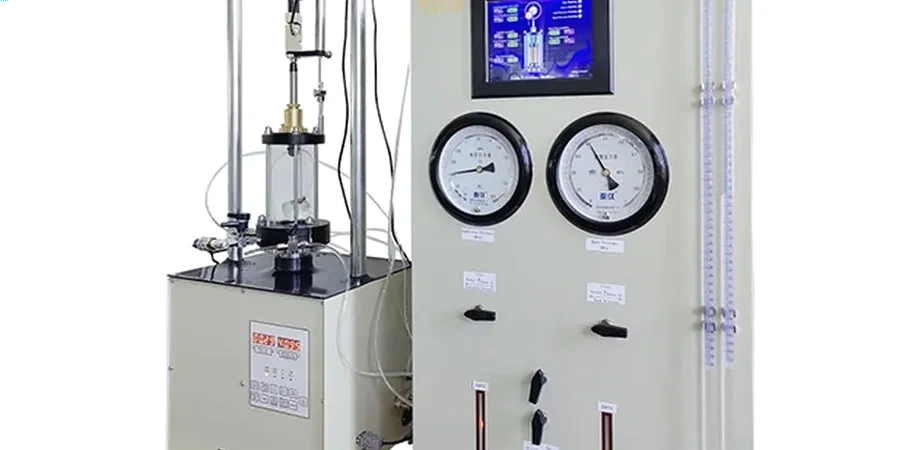
All geotechnical laboratory work in New Zealand must comply with the stringent framework established by NZS 4402 (Methods of Testing Soils for Civil Engineering Purposes) and the broader requirements of the New Zealand Building Code (specifically Clause B1: Structure). These standards dictate the methodologies for everything from sample preparation to the execution of specific tests, ensuring consistency and reliability in the results. A precise grain size analysis (sieve + hydrometer) is a cornerstone of this process, as the distribution of particle sizes from coarse gravels down to microscopic clays fundamentally governs a soil's drainage characteristics, bearing capacity, and susceptibility to liquefaction—a key consideration in this seismically active coastal district.
A wide array of projects across Gisborne depend on the insights provided by this category of testing. For civil infrastructure, from the city's network upgrades to rural roading through the hinterland, laboratory data validates compaction and the suitability of locally won aggregates. Residential and commercial developers rely on foundation investigations where parameters derived from shear strength and consolidation tests dictate footing dimensions and ground improvement needs. The region's vital horticultural and forestry sectors also benefit, with laboratory analysis informing earth dam construction, access track stability, and the management of sediment control for water quality. Ultimately, any project that involves cutting, filling, or loading the ground requires this rigorous analytical backbone.
Quick answers
What is the purpose of geotechnical laboratory testing for a project in Gisborne?
The purpose is to accurately determine the physical and mechanical properties of soil and rock to inform safe and economic design. In Gisborne's variable geology, testing moves beyond visual classification to quantify critical parameters like strength, compressibility, and drainage potential, directly mitigating risks associated with slope instability, foundation settlement, and seismic activity.
How do local geological conditions in Gisborne influence the choice of laboratory tests?
Gisborne's weak, clay-rich sedimentary rocks and volcanic ash soils are highly susceptible to moisture-induced strength loss and erosion. This demands a strong focus on tests like Atterberg limits and particle size distribution to assess plasticity and drainage, alongside shear strength tests to evaluate stability for earthworks and foundations on the region's extensive hill slopes.
What New Zealand standards govern geotechnical laboratory testing?
Laboratory testing is primarily governed by NZS 4402, which provides the standardised methods for testing soils for civil engineering purposes. Compliance with this standard is essential to meet the performance requirements of the New Zealand Building Code, particularly Clause B1 (Structure), ensuring test results are robust, repeatable, and legally defensible.
When are laboratory tests required during the construction process?
Testing is critical during both the investigation and construction phases. Pre-construction, it characterises the ground for design. During earthworks, ongoing classification and compaction tests, such as those from grain size analysis, verify that fill materials meet specification and that ground improvement has achieved the required density and bearing capacity before further building proceeds.